What the Democracy Labs Toolkit Includes and How to Use It
How to Use the Toolkit
The Toolkit Includes
Welcoming booklet
A guided reflection booklet to be completed before the workshop to help participants revisit past and recent experiences of democratic participation and engagement as preparation for the workshop.
Democratic principles cards
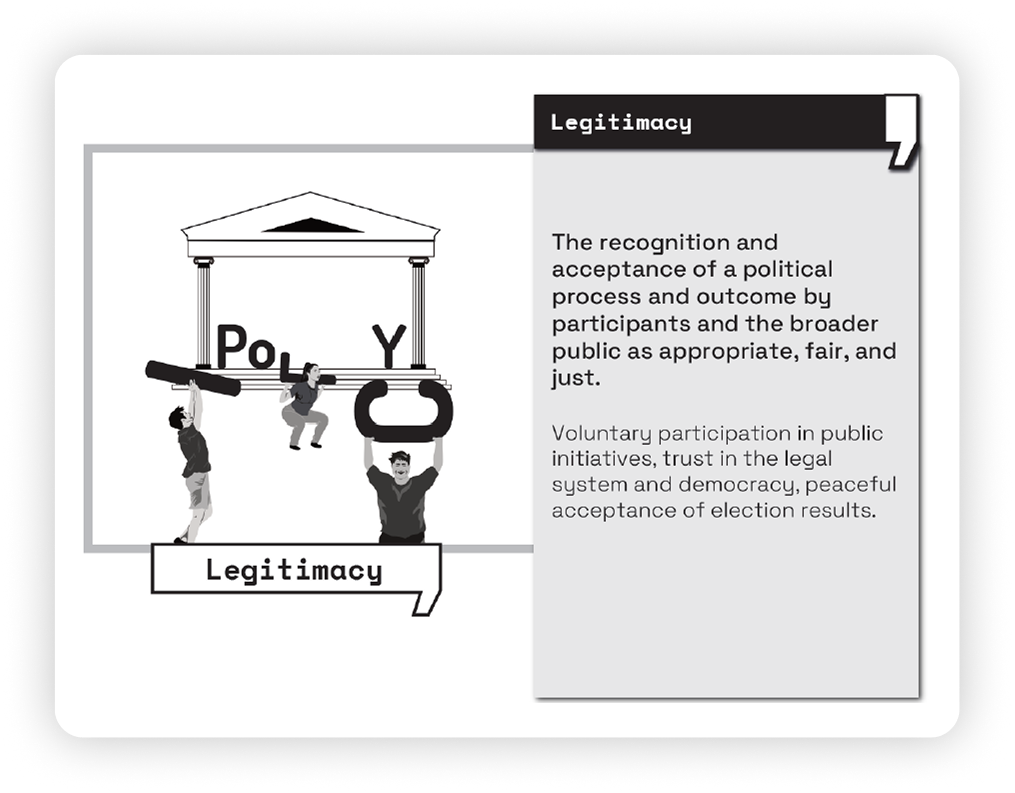
A small set of principles used to prioritise what matters most and to structure the sensemaking discussion. Each card provides a short definition and an example, and the set covers Inclusivity, Citizen Control, Impactfulness, Transparency, Dialogue, and Legitimacy. Cards can be adapted, merged, or extended if needed.
Experience canvas
A canvas for sensemaking, used to synthesise patterns, tensions, and needs from participants’ experiences.
Provotyping toolkit
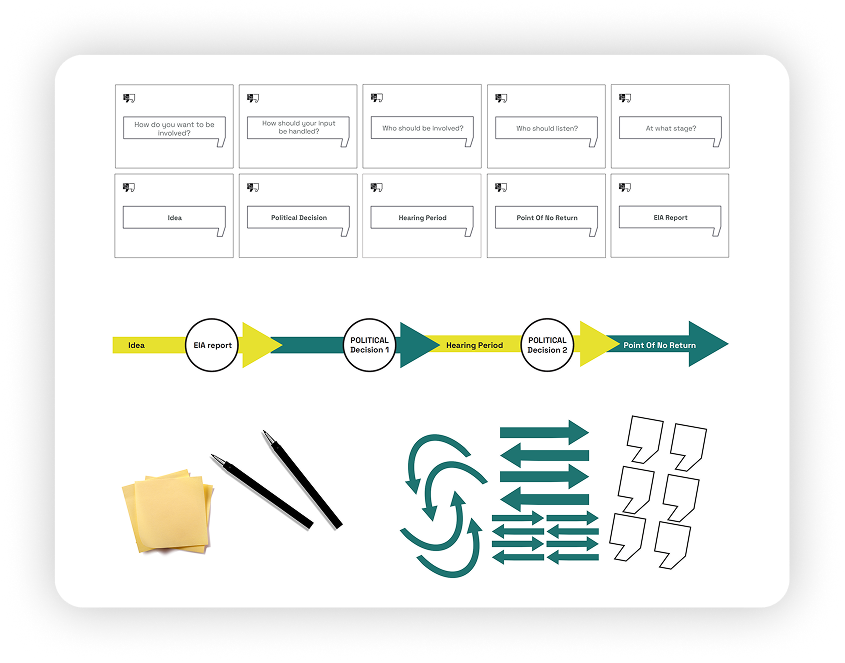
A narrative provotype case and a decision-making timeline exercise used to examine how decisions are made and to empower participants to improve the process.
Democratic innovations wheel
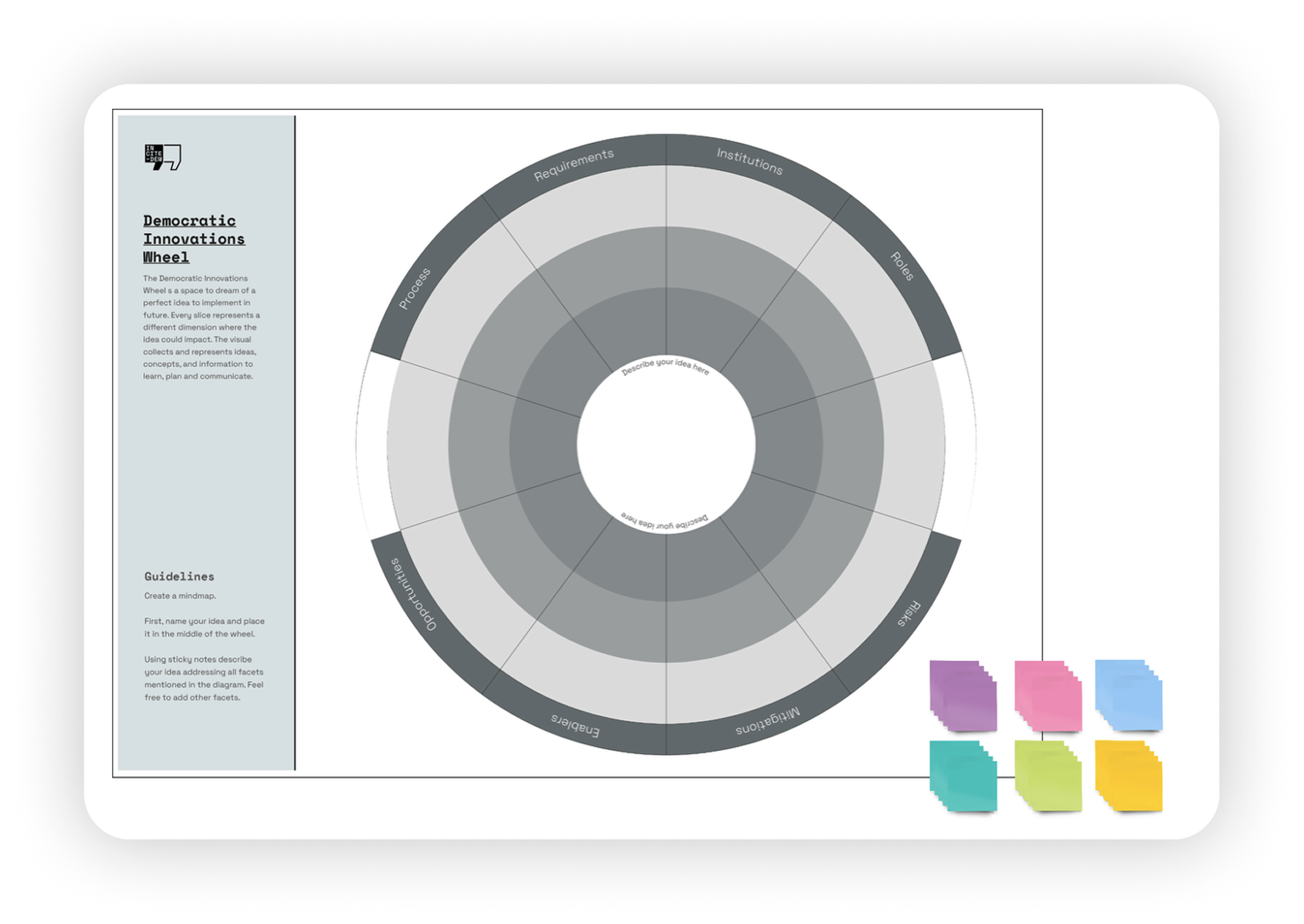
A template that helps participants develop a democratic innovation concept and describe its key elements by working through the democratic principles.
Storyboard
A template used to illustrate a democratic innovation in action by turning an idea into a short, step-by-step scenario of how citizens would engage with it in a real-life situation. Story cards can be used as prompts.
How to Use
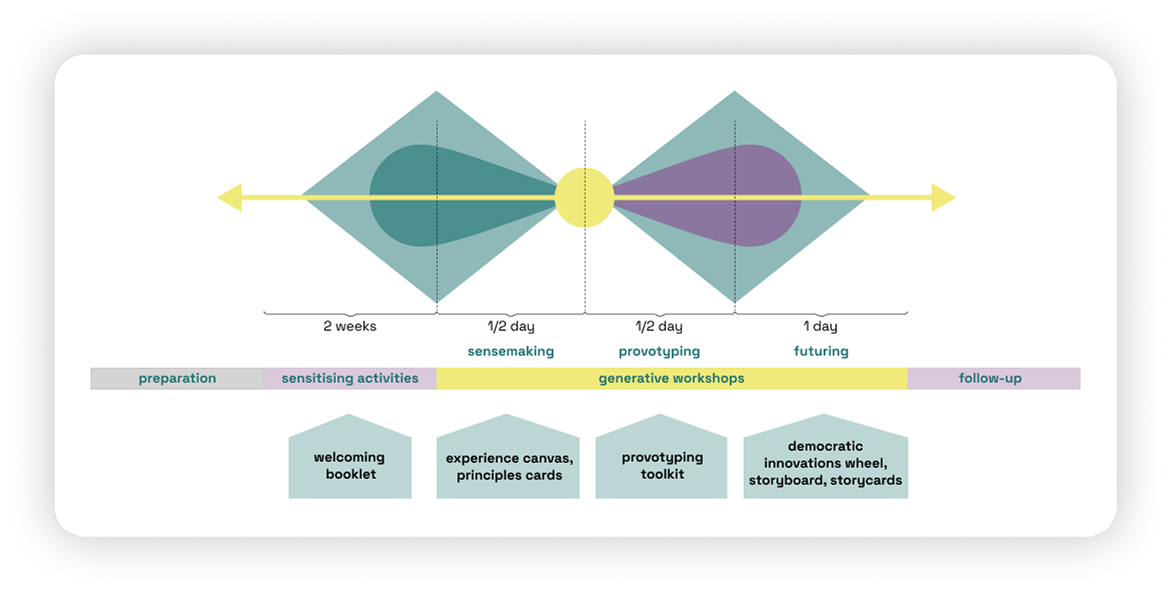
The toolkit combines individual pre-work and collaborative workshop activities. The diagram shows a typical sequence and timing of the key activities, along with the materials used within them. The flow is suggested, not fixed.
Preparation
Preparation covers participant recruitment, early contact, and workshop setup. It clarifies what participants complete before the workshop and what facilitators prepare in advance. Any ethics or consent procedures depend on the local context.
Facilitators recruit participants, share a short overview of the process and timeline, and introduce the Welcoming booklet with clear instructions about when it should be completed. Facilitators also provide a clear contact point for questions before the workshop.
Workshop setup
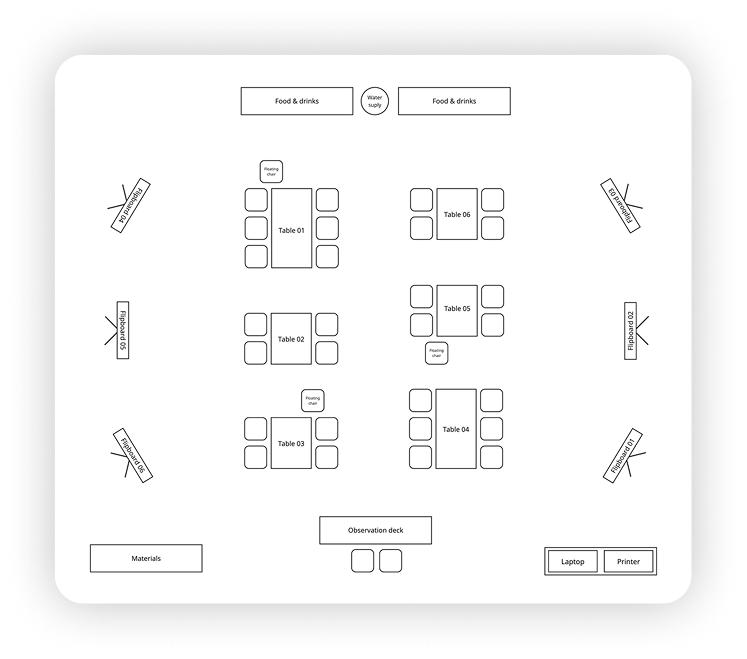
Collaborative activities are typically completed in small groups at tables and can be run in one group or in several groups working in parallel, depending on the number of participants and facilitation support.
Facilitators set up tables for small-group work and allow space for brief plenary moments such as introductions and sharing back. Facilitators prepare one printed set of templates per table, provide basic stationery, and plan facilitation support depending on the number of participants.
Sensitising
Sensitising is an individual activity completed before the workshop to help participants prepare for the group discussion.
Welcoming booklet
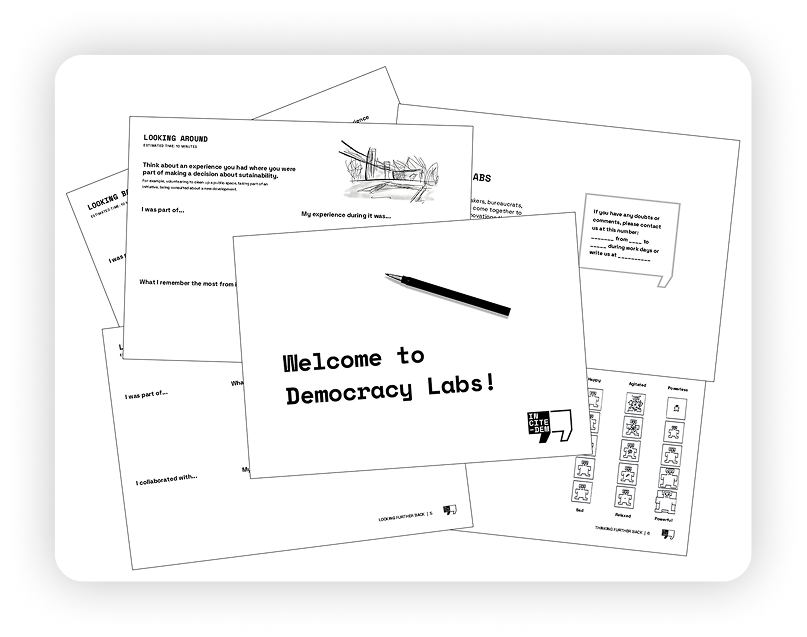
Participants complete the Welcoming booklet as an individual sensitising activity. The booklet includes guided reflection activities that help participants revisit past and recent experiences of democratic participation and engagement, including moments of feeling empowered or disenfranchised in decision-making that affects their lives. Participants bring the completed booklet to the workshop session and use it as input for the discussion.
Participants document four moments, including both frustrating and encouraging situations. They describe what happened and how it felt, and they note what could be done differently to prevent similar issues or strengthen what worked well in future democratic participation and decision-making processes.
Sensemaking
During Sensemaking, the first collaborative workshop activity, participants work with democratic principles and connect sensitising reflections to broader challenges in democratic participation.
Democratic principles cards
Democratic principles cards help participants prioritise what matters most when discussing democratic participation. The cards provide a starting set of principles and a few empty cards, and participants use them to add new principles or adjust existing ones before agreeing on priorities. Participants agree on two priority principles that will guide the discussion.
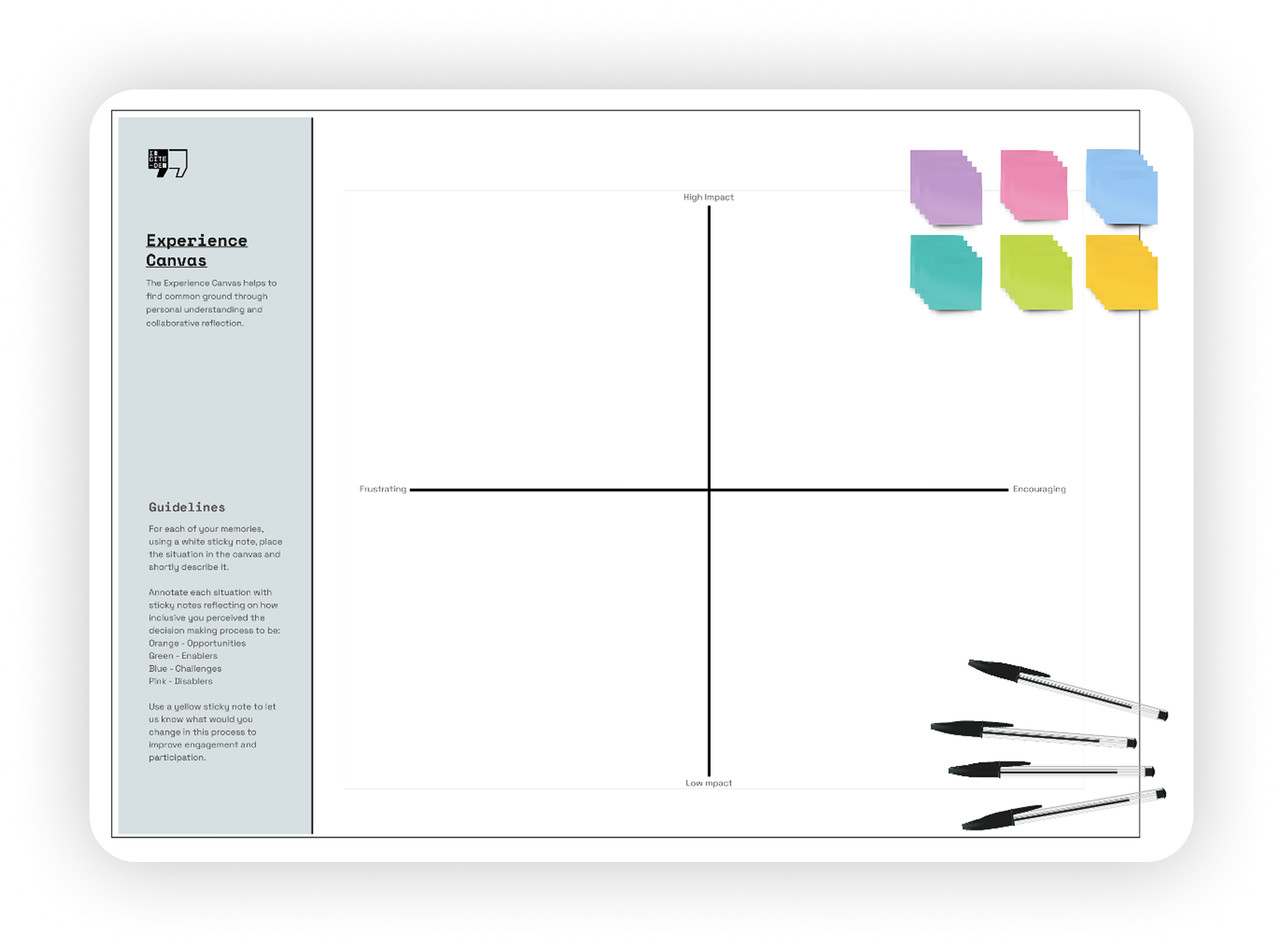
Experience canvas
The Experience canvas supports structured sensemaking based on the chosen principles. Participants use the canvas to map experiences, identify recurring patterns and tensions, and discuss where the priority principles were supported or undermined. The canvas also provides space for capturing improvement ideas that would better support the chosen principles in future democratic participation processes.
Provotyping
In the next collaborative workshop activity, participants use the Provotyping toolkit, including a narrative provotype and a decision-making timeline, to surface assumptions and tensions in how decisions are made. The provotype case introduces a provocative scenario that invites critical reflection and helps participants examine whose voices are included, when input is gathered, and how decisions are ultimately taken.
Timeline, cards, stickers
Participants use the timeline template and the provotyping cards to reconstruct the decision-making process and discuss who is involved, who is heard, and who decides at different points. Participants then redesign the timeline to propose a more open, transparent, and citizen-inclusive alternative, and groups share their redesigned timelines when several tables work in parallel. Stickers can be used to support visual mapping.
Futuring
Democratic innovations wheel
Participants use the Democratic innovations wheel to develop one shared innovation idea and describe its key elements. The wheel is structured around the democratic principles, and includes blank sections in case the group adds additional principles. The process can be done in two rounds: first to outline the idea, then to refine it after a short pause.
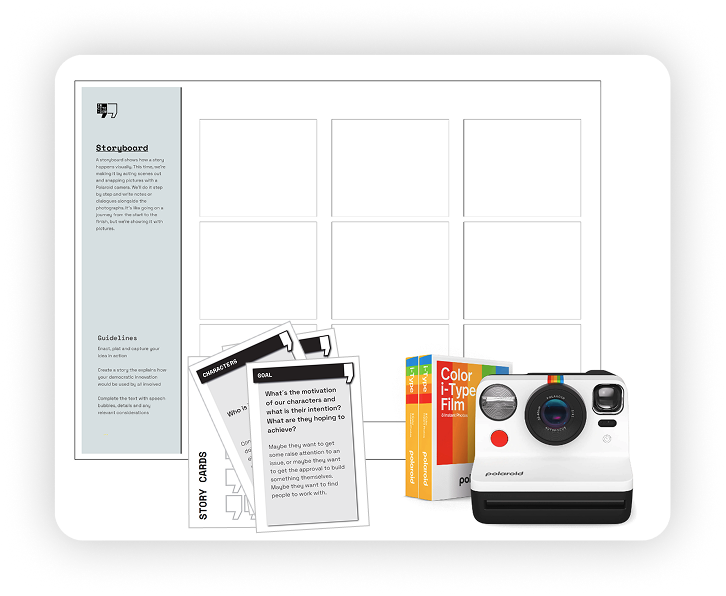
Storyboard
Participants then use the Storyboard to make the proposal tangible through a short sequence of moments, with one moment per quadrant. Participants can use drawings or photos, and add a short title or caption for each moment. After drafting, the group reviews the storyboard to check what is missing and what could be improved.
Story cards can support storyboarding by prompting reflection on Goals, Characters, Community, Tools & Props, Roles, and Rules, helping the group add detail and make the scenario more concrete.
Follow-up
A short follow-up can be added to capture feedback while the workshop experience is still fresh. Facilitators collect feedback through a short questionnaire or feedback form and, if useful, keep in touch with participants to invite a small follow-up activity to further develop ideas.