
Engaging Citizens in Discussions on Democratic Innovation Through Play
The Democracy Labs Game
About the Democracy Labs Game
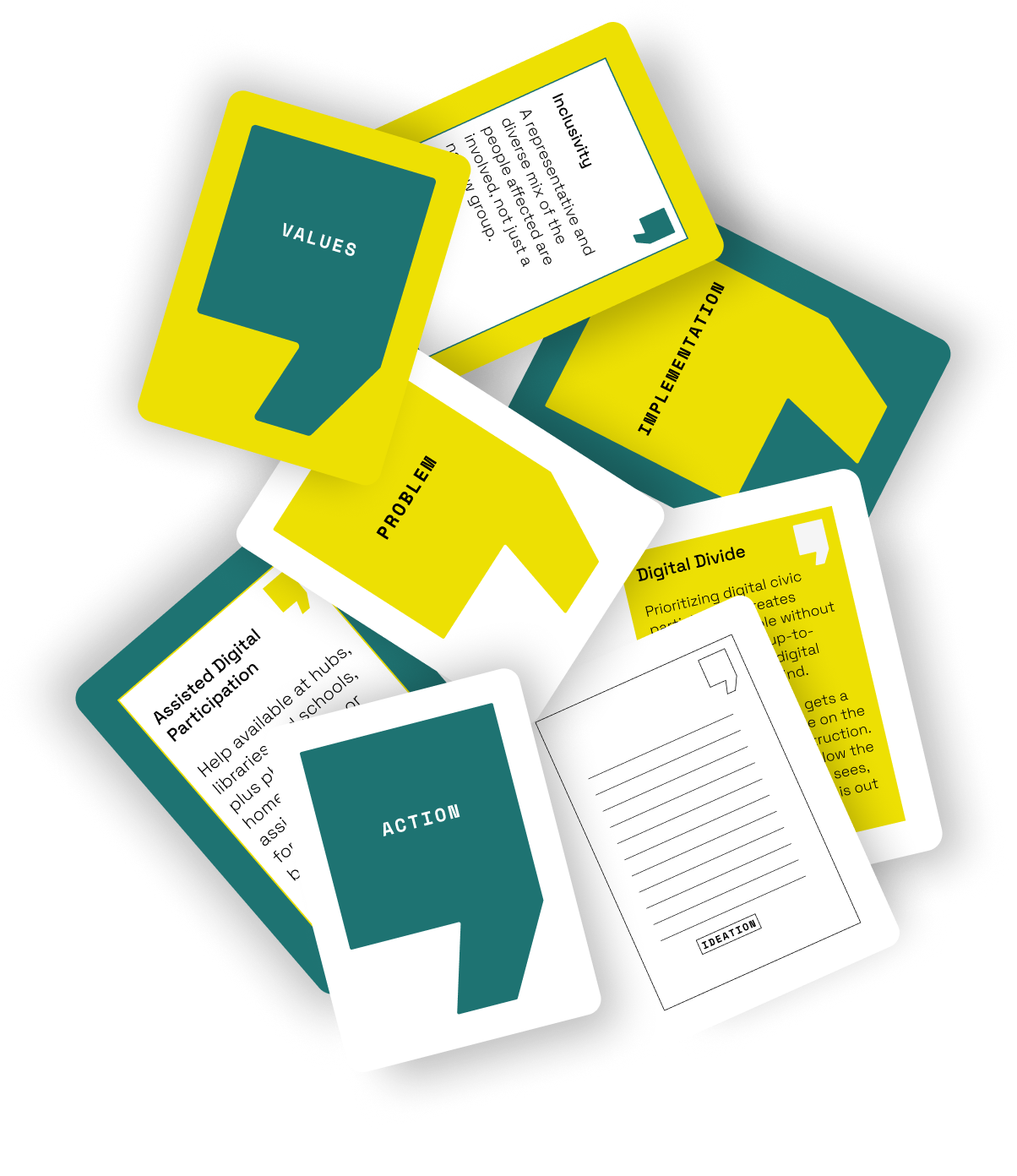
The Democracy Labs Game is a collaborative, card-based tabletop serious game that grew out of the INCITE-DEM Democracy Labs.
Designed for self-play, the game can be played without a facilitator. The game provides a structured yet flexible environment in which participants encounter democratic tensions, engage in collaborative exploration, and co-create democratic innovations that could strengthen democratic participation in the near future.
In each play session, two to five players work with a shared democracy-related challenge, adopt different roles and act from those role-based perspectives, discuss which democratic values are particularly important for the problem, and collectively shape possible democratic solutions rather than competing against each other.
Print the materials (colour or black-and-white), cut the cards, and gather a small group of 2-5 players. Choose a democratic challenge that feels relevant to your context, follow the instructions, and let the conversation unfold. Print-ready files are provided on the Downloads page.
Game Design
1. Democracy Labs
Democracy Labs workshops in six countries brought together citizens, activists, public servants and other stakeholders to share lived experiences of democracy and co-imagine future possibilities, using the Democracy Labs Toolkit. Data from the workshop, which presented citizens’ imaginaries of future democracy, were analysed and synthesised into common themes, tensions and values that captured hopes and frustrations about democracy.
2. Creating and testing stories
Using the citizens’ input from the Democracy Labs, the team created six short near-future fiction stories, which were tested across six countries in an online survey.
3. Prototyping and testing the game
Insights from the workshops, stories, and surveys were translated into the game elements. The prototype game was playtested, and feedback on rules, language and flow was used to refine the instructions, card set and overall structure of the game.
Game Overview
Target Audience
The game is accessible and easy to use and does not require specialised training. It serves as both a conversation starter and an ideation tool. The game may be particularly useful for:
• Educators and students in schools, universities and non-formal education who want to explore democracy, participation and futures thinking.
• Community organisers who wish to open conversations about local issues, participation barriers and possible solutions.
• Researchers and designers interested in generative methods, civic imagination and co-creation around democratic futures.
• Libraries, youth centres and civic spaces that are looking for inclusive activities that bring diverse groups together around democracy-related topics.
• Municipal staff, policymakers and public institutions that want to listen to residents, test ideas in a speculative form and better understand expectations and concerns.

Game Presentation
This webinar recording presents the Democracy Labs Game and how it emerged from the Democracy Labs work. It covers the game’s main components, the basic flow of play, and how it can be used across different contexts.